
Why certainty costs you money
The brain's expensive need to know
There’s a moment that happens when you’re faced with a financial decision and you don’t have all the information.
Not a big moment. A quiet one. A subtle shift in how you feel.
Uncomfortable. Uneasy. Like something’s not quite right, even though nothing bad has actually happened.
That feeling? It’s your brain telling you: I don’t like this. I need to know how this ends.
And here’s the thing: that feeling is so powerful that you’ll pay for it to go away. Literally.
You know this pattern. The savings account that pays less interest but feels safer because it’s guaranteed. The investment you don’t make because the outcome is uncertain. The insurance policy you buy not because the maths make sense but because not knowing what might happen feels unbearable.
We call this being risk-averse. Playing it safe. Being cautious with money.
But here’s what’s actually happening: your brain is willing to sacrifice financial returns to eliminate uncertainty.
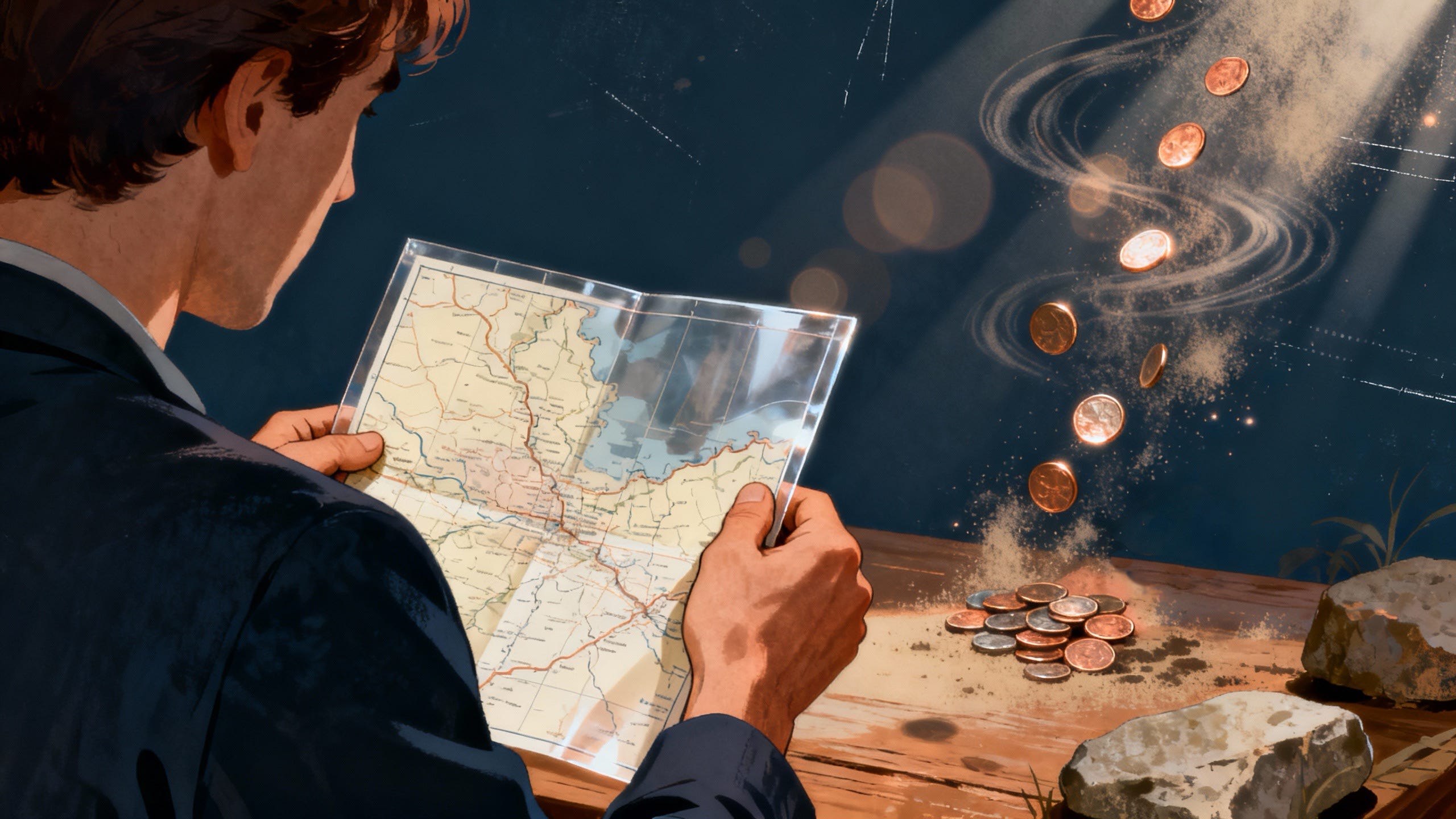
This isn’t caution. It’s the neuroscience of not knowing.
Your brain has a deep, evolutionary need for predictability.
For your ancestors, uncertainty was dangerous. If you didn’t know whether the next season would bring food or famine, whether the neighbouring group was friendly or hostile, whether the path ahead was safe or full of predators, that uncertainty could kill you.
So your brain evolved to find uncertainty deeply uncomfortable. Actively unpleasant. Something to be resolved as quickly as possible, at almost any cost.
Neuroscientists call this intolerance of uncertainty. And it’s one of the most powerful forces shaping how we make decisions.
Including financial ones.
When you’re faced with two options, one certain and one uncertain, even if the uncertain option is objectively better on paper, your brain pushes hard towards the certain one. Not because you’ve done the maths. Because uncertainty feels threatening. And your brain wants that feeling to stop.
So you pay. In returns, in opportunity, in outcomes. You pay to make the discomfort go away.
And the financial industry knows this.
Think about how financial products are marketed.
Guaranteed returns. Capital protection. No risk. Certainty.
These words aren’t just descriptive. They’re designed to speak directly to your brain’s deepest need: to know how things will turn out.
And it works. Because your brain doesn’t evaluate financial decisions the way a spreadsheet does. It evaluates them the way your ancestors evaluated survival decisions. Through the lens of threat and safety. Known and unknown.
A guaranteed 2% return feels safer than a probable 7% return, even though the maths clearly favour the second option. Because “guaranteed” satisfies something in your brain that “probable” simply can’t.
Your ancestors didn’t have the luxury of thinking in probabilities. They needed to know. Right now. Is this safe or isn’t it?
That wiring is still running. And in a world built on financial products designed to exploit it, it costs you.
And then there’s the information trap.
When your brain feels uncertain, it wants more information. More data. More analysis. More reassurance.
So you research. You read. You compare. You ask for advice. You spend hours trying to find the answer that will make the uncertainty go away.
Except it never quite does. Because financial decisions are inherently uncertain. The future is always unknown. No amount of research will give you the guarantee your brain is craving.
So you keep researching. Keep looking. Keep putting off the decision because making it without certainty feels impossible.
Meanwhile, time passes. And in financial terms, time is the one thing you can never get back.
The person who made a good enough decision last year and invested is almost always better off than the person who’s still researching this year, waiting for certainty that will never come.
Your brain’s need to know is keeping you from doing. And doing is where the money actually grows.
So what do you do with this?
You stop blaming yourself for being too cautious. You’re not stupid. You’re not bad with money.
You’re wired to find uncertainty deeply uncomfortable, and your brain is doing everything it can to make that discomfort stop.
Understanding this doesn’t eliminate the discomfort. But it does change how you respond to it.
Instead of: “I just need a bit more information before I decide.”
You get: “Right. That’s my brain wanting certainty, not a sign I actually need more data.”
Sometimes it’s about recognising the difference between useful research and comfort-seeking. Are you genuinely learning something new, or are you just looking for reassurance? If it’s the latter, you probably have enough information already.
Sometimes it’s about accepting that uncertainty is the price of opportunity. The investments that build wealth over time are the ones that come with no guarantees. Your brain doesn’t like that. But your future self will thank you for sitting with the discomfort.
Sometimes it’s about making the decision smaller. You don’t have to commit everything at once. Start with what feels manageable. Let your brain get used to a little uncertainty before you ask it to tolerate a lot.
And sometimes it’s about noticing when the financial industry is speaking directly to your wiring. When a product is marketed on certainty and safety, ask yourself: is this genuinely the best option? Or is it just the most comfortable one?
The goal isn’t to become someone who’s reckless with money. It’s to understand why certainty feels so good, and make sure you’re not paying too much for it.
Next time: The neuroscience of imposter syndrome
When you’ve achieved something genuine and your brain immediately tells you it was luck, fluke, or a mistake waiting to be discovered. Why success and self-doubt arrive together, and what your brain is actually doing.
What do you choose when you don’t have to?
The guaranteed option or the uncertain one? And when you think about it honestly, how much has that choice cost you?
Hit reply and tell me. I read every response.
Until next time, take care.
Neil
Please challenge or correct my logic here, but I'm wondering if one way to frame the certainty vs. "better on paper" dilemma is through the lens of aggregation.
My fundamental assumption is that if I consistently make future financial decisions based on what the math suggests is the better choice, I should be better off in aggregate over the long run.
Of course, there will be individual cases where taking the certain path would have produced the better outcome. But if the probabilities and expected outcomes are sound, wouldn't consistently choosing the "better on paper" option result in a net positive over many decisions?
That said, I realize the stakes aren't always equal and some losses can be more consequential than others, so there is likely some nuance missing from this line of thinking.
And the financial industry knows this. Which is why investments are sold not bought😎I had a client with a huge range of disparate investments no intention to build a diversified portfolio. I asked why she had bought the funds and she said she looked in the Sunday papers and bought the fund which had the biggest advert!